September 23, 2026

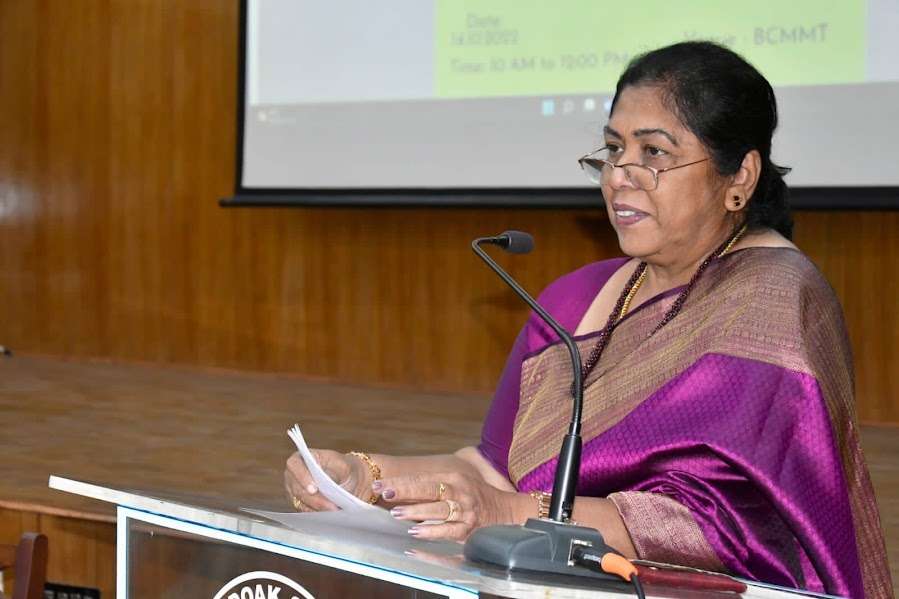
Throughout the United Board’s long service to Christian higher education in Asia, countless academic leaders have been shaped by its programs and carried its spirit into institutions across the continent. But few have stayed so close, for so long, and acknowledged so openly what the United Board, its programs, and its people have meant to her, as Dr. Vasanthi Vijayakumar.
Today Dr. Vijayakumar sits at the helm of the Captain Williamson Sangma State University (CWSSU) in Tura, Meghalaya, the first state university in a northeastern Indian state that had waited more than five decades for one of its own.
Dr. Vijayakumar graduated from Women’s Christian College in Chennai, itself a United Board partner institution, before completing her master’s and research in history at Madras Christian College (MCC), another longtime United Board partner.
She joined MCC as faculty in 1986, the year when women’s studies blossomed on its campus and the Center for Women’s Studies was established. From the outset, the United Board was there, funding curriculum advancement and supporting the center’s early development. “That was really the beginning of my leadership journey,” Dr. Vijayakumar says, describing how she framed syllabi for postgraduate students and designed a course taken by undergraduates across the humanities.
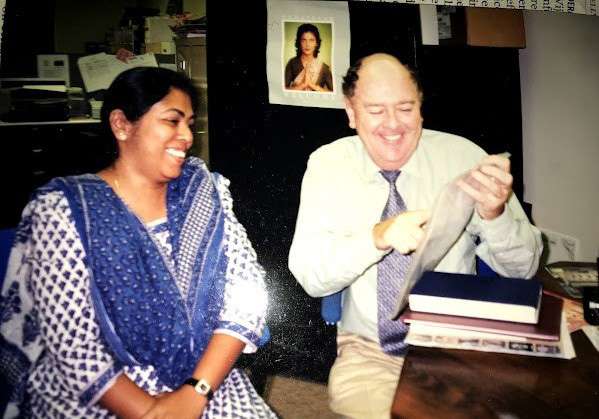
The 1990s were a decade of expanding horizons. By the end of it she had become Dean of Women Students, overseeing a large body of students, even as she quietly wondered why a historian kept being drawn deeper into administration. “I now see how that prepared me for my current role,” she reflects. A 1999 service-learning program in Quezon City, the Philippines, proved another turning point, opening a new dimension to her work and beginning her networking with United Board institutions across Asia.
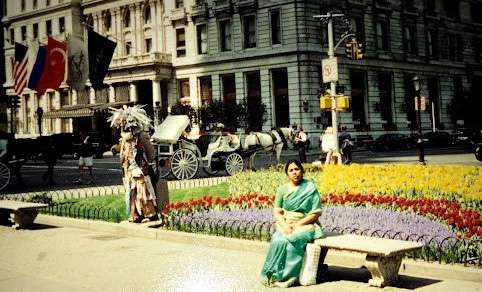
In 2003, she joined the first cohort of the Institute for Advanced Study in Asian Cultures and Theologies (IASACT) at Chung Chi College, Hong Kong. Her mentor was the late Dr. Preman Niles, whom she remembers with deep affection. Spending 45 days there—among fine libraries, financial support, and attentive mentors—she pursued oral history research on women missionaries in India, rediscovering the overlooked contributions of missionary wives and Indian women. “The program had a tremendous impact on my research,” she says. In that period, too, a faculty scholarship by the United Board enabled her to visit the Institute for Women’s Leadership at Rutgers University in the US for nine months, where her research was tremendously helped by the archives at the New Brunswick Theological Seminary.
From there she rose steadily at MCC: department head, warden, member of institutional committees and, before retirement, a member of the college board. “All these roles helped me grow,” she reflects, “from developing confidence to becoming assertive and, importantly, to developing the desire to serve. My years at Madras Christian College were intertwined with the United Board-supported development. Whenever the United Board changed focus or launched new initiatives, I was part of those efforts.”
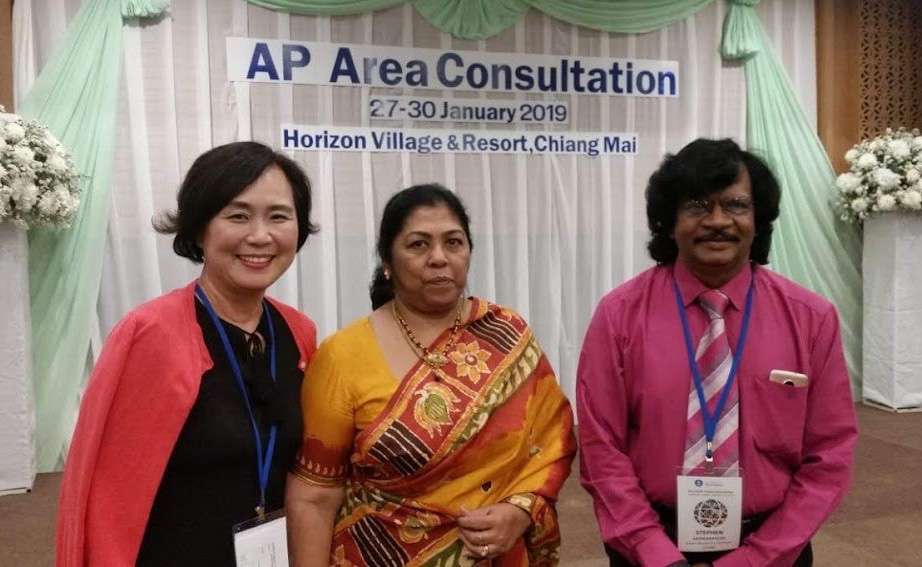
“Sitting now as the head of a university,” she says, “the names and faces of people I met at United Board programs who shaped my leadership style come readily— Mitra G. Augustine, David Vikner, David Suh, Shanti Manuel, Betty Cerno-McCann, Mary Hartman, Bonnie Smith and Professor Eun-Shil Kim from Ewha Womans University. From them I absorbed a set of habits: maintaining focus, doing things straightforwardly, blending academicism with administration, humility and always giving back to the community.”
Retirement, when it came, did not last. Invited to lead C. S. I. Ewart Women’s Christian College, she helped elevate it into a postgraduate institution, introducing four new postgraduate departments and launching programs, some in partnership with the United Board. She retired again in 2023. Then came an offer that would take a daughter of southern India to the far northeast.
Named in honor of Captain Williamson A. Sangma, Meghalaya’s founding Chief Minister, CWSSU is, in Dr. Vijayakumar’s words, “the brainchild of the current Chief Minister Shri Conrad K. Sangma.” The choice of a main campus in Tura, a semi-urban, largely agrarian district, was deliberate. “Students there have very limited options for higher education,” she explains, “placing the university in Tura brings opportunity to an underserved region.”
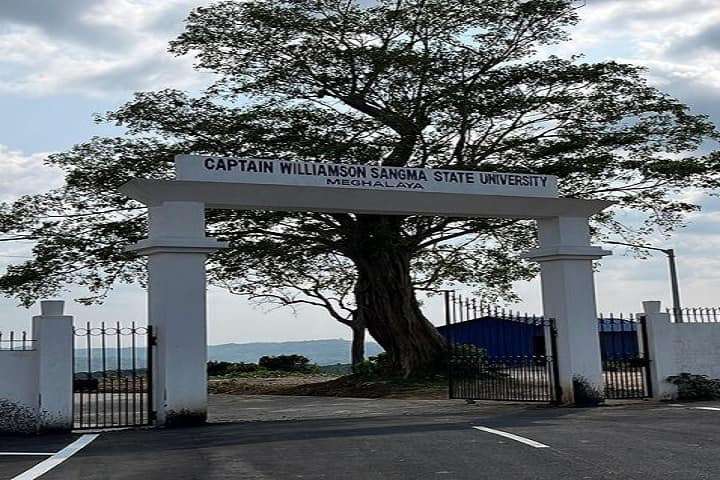
Appointed in December 2024, Dr. Vijayakumar saw the university begin functioning in August 2025. Barely a year old, CWSSU today runs some 15 humanities departments with about 60 faculty and 600 postgraduate students, adding five science programs and integrating artificial intelligence this year. Its 11 affiliated colleges handle undergraduate education. New professional ventures are taking shape, beginning with a College of Architecture and Urban Planning, with veterinary, horticulture, agriculture and fisheries programs envisioned to follow.
For Dr. Vijayakumar, a degree alone is not enough. “Simply giving students a postgraduate degree and sending them into the world is not sufficient,” she says. This year the university is launching a Skill Development Center, where each department will teach a practical skill, so graduates leave equipped for employment as well as further study. Music, too, indigenous and Western, is high on the community’s wish list. “Music is integral to Northeastern culture,” she notes, “and I am looking forward to building that area.”
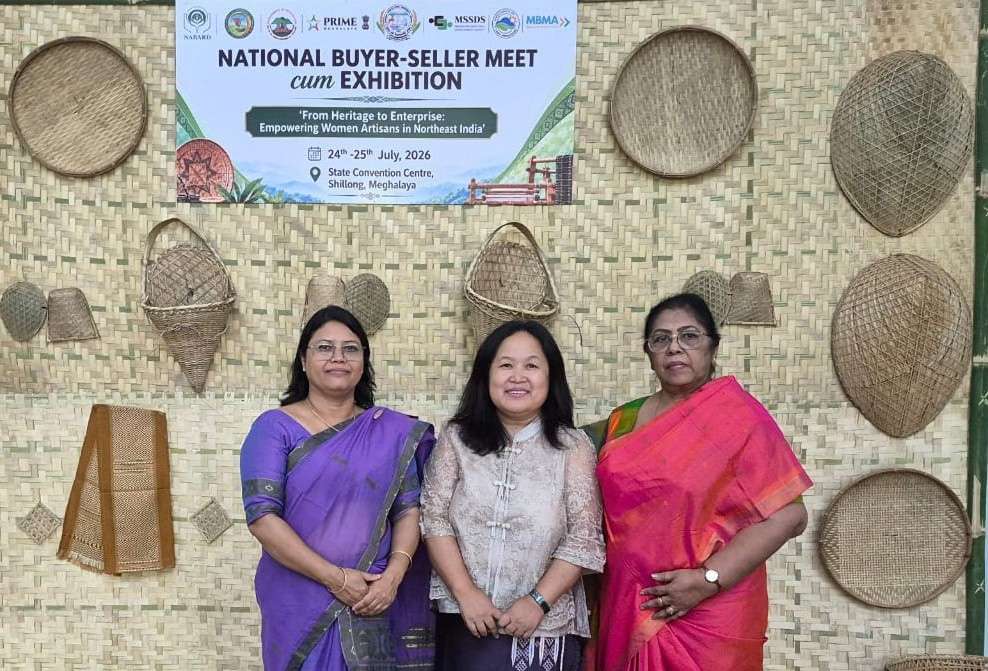
Here the United Board network re-enters the story. On May 21–22, CWSSU and Payap University in Thailand held a two-day online workshop on "Human Resource Development and Design Thinking for School Improvement in Tribal and Rural Contexts"—a collaboration the United Board had the opportunity to help facilitate. Drawing 41 faculty and students from both countries, it moved beyond one-time training toward cultures of continuous learning, using institutional reflection, empathy mapping, and prototyping to design responses suited to the region's rural and tribal schools. The program was, she reports, "very successful," a first step toward the exchange of faculty and students through future memoranda of understanding.
Her ambitions reach wider still. After a Northeast-focused gathering at St. Stephen’s College—attended by Dr. Pareena Gupta Lawrence, United Board President, she began drafting a proposal for a Northeastern Academic Conclave: an annual academic platform rotating among the region’s seven states, gathering scholars and institutions. “It could become a sustained collaborative platform,” she says, “rather than just one-off events”—the same instinct for building enduring networks and bringing together academics from the northeastern regions for academic discourse, to formulate strategies for peace and conflict resolutions to build a younger generation that would make a difference which has marked the United Board’s own work across Asia.
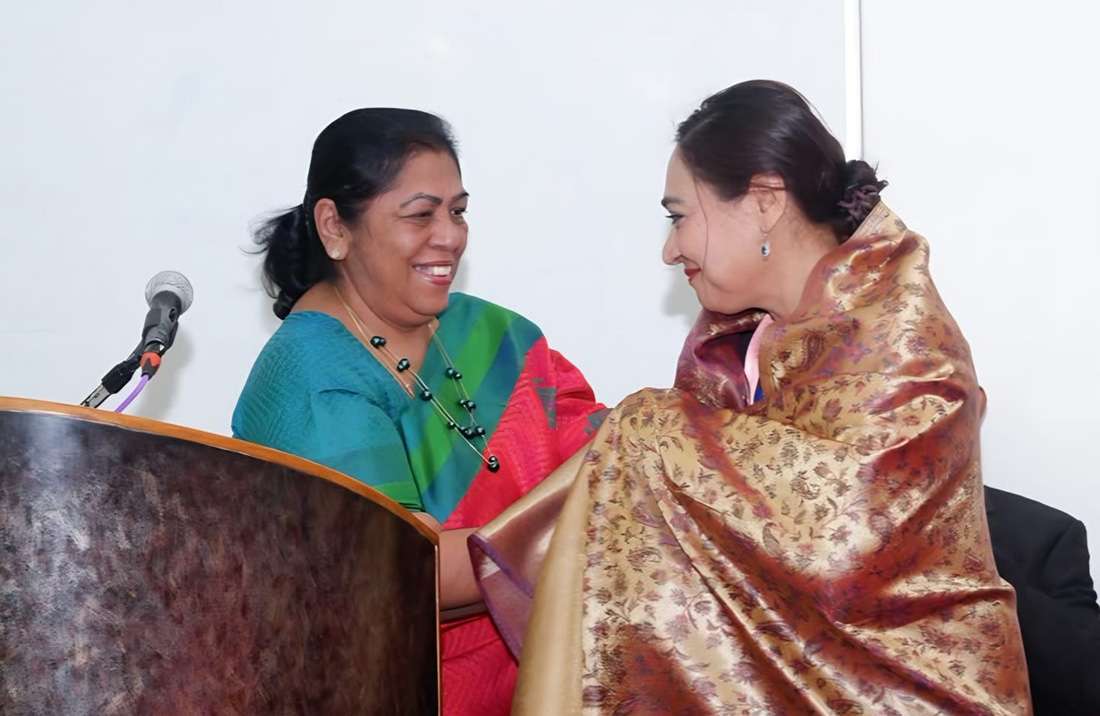
Her family remains in Chennai—a husband who’s a veterinary doctor, a daughter and a son, and two grandsons. Travel to Meghalaya is no small matter: a two-hour flight to Guwahati, then some six hours by road. Yet she manages, finding rest in reading, cross-stitch, old favorites like ABBA and Cliff Richard, and, before sleep, the Bible and spiritual songs.
Looking back over the arc from historian, dean, principal, to founding Vice Chancellor, she sees at every turn the company of the United Board had prepared her for all these roles. She says, “I am very grateful to the United Board for the experience I have had along the way, and for how it shaped my leadership.” With that gratitude, she is now carrying its values into one of India’s most underserved frontiers.