
June 29, 2026

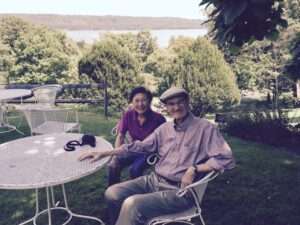
Lucia and Sheldon Severinghaus in Ithaca, 2015
Lucia Liu Severinghaus did not begin her academic life intending to become one of Asia’s leading ornithologists. She first majored in physics, then English, and earned a master’s degree in literature. Everything changed because of her husband. “My late husband Sheldon Severinghaus opened my eyes to the natural world,” she says. “Without his support and guidance, I would not have become a promoter and researcher in birds and conservation.”
The United Board sits quietly but decisively at the origin of this partnership. “I studied at Tunghai University for my BA, and really appreciated the quality and flexibility of education I received there,” Lucia notes. “My husband was hired by the United Board to teach at Tunghai after he received his master’s from Cornell. So credit to the United Board for giving us the chance to meet each other, and for making it possible for Shel to make so many important contributions to Taiwan.”
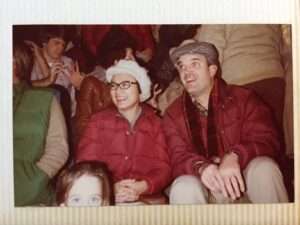
Lucia and Shel in Cornell in the 1980s
After her MA, Lucia became a full-time field assistant to Sheldon, who was conducting the first PhD research on Taiwan’s endemic pheasants. These studies were not merely academic; he ultimately secured nature-reserve status for the best pheasant habitat, protecting a stronghold for plants, animals, and the forests that hold Taiwan’s mountain slopes in place.
One love of nature; two naturalists
Eventually, Lucia discovered that loving nature was not enough to protect it, so she went back to school. She earned a second master’s in environmental education and a PhD in natural resources at Cornell. Those credentials moved her from the margins of the conservation conversation to its center. She became a researcher at Academia Sinica’s Biodiversity Research Center and built a career at the intersection of avian ecology and biodiversity conservation.
She helped shape the science behind Taiwan’s expanding system of national parks and later coordinated The Avifauna of Taiwan, a six-year project to turn scattered bird records into a baseline reference for the country’s birdlife. In recognition of decades of work, CommonWealth Magazine listed her among the top 200 influential people in 400 years of Taiwan history, and the Council of Agriculture named her a “Person Who Made Significant Contribution to Forestry and Conservation”.
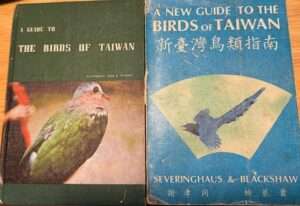
Sheldon’s career traced a parallel, complementary arc. Beyond writing the first two field guides to Taiwan’s birds (photo above) and helping to draft the island’s first wildlife conservation law, he brought global perspectives to national decisions as Asia Foundation’s representative in Taiwan. He played a key role in stopping a planned highway that would have sliced through the fragile high mountain heart of Yushan National Park. For Lucia, this was partnership in the fullest sense—two vocations, one shared commitment to the land and its people.
New heaven, new birds
If pheasants initiated Lucia to the love and study of winged creatures, owls carried her into the public imagination. Beginning in the 1970s, she undertook what became a lifelong study of the endangered Lanyu scops owl, a small island species native to Orchid Island, off Taiwan’s east coast. When she started, international groups had just labeled several Taiwanese species endangered, and local Tao communities regarded the owl as a dark omen, a messenger of the underworld best driven away.
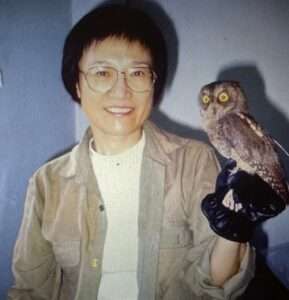
In 1993, Lucia produced a documentary, Du-Du Wu: The Story of the Lanyu Scops Owl, which the National Geographic Channel broadcast repeatedly across Asia. The film showed adult owls raising their fuzzy white owlets and revealed the species’ quirky habits—nesting in old tree trunks, switching mates and roosts with each new breeding season, and living largely on insects and invertebrates. She remarks, “This film changed people’s attitudes towards owls in Lanyu, in Taiwan, and in many areas in Asia.”
Public schools in Taiwan began using the film as educational material. The Lanyu scops owl transformed from an inauspicious presence into a celebrated local symbol, attracting tourists and researchers alike. On Lanyu, Tao families who once chased owls away started welcoming them into their villages; in Taiwan, schools installed nest boxes; local news outlets reported excitedly on owl sightings in parks. Today, the species has become a conservation education success story, and Lucia is the first Taiwanese researcher elected to the US-based World Owl Hall of Fame.
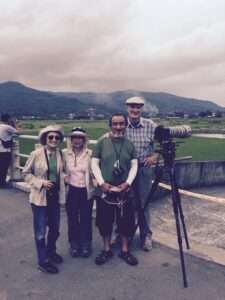
Looking for the Siberian Crane in Taiwan
For her, the lesson is clear: storytelling grounded in careful science can move hearts as well as laws. “I think public education is the most effective tool to change attitudes,” she says. In the case of the Lanyu owls, patient fieldwork, engaging narrative, and visual media shifted a community’s relationship with a once-feared species.
Lucia’s journey has always been entwined with education—her own and that of the countless students, teachers, and young conservationists she has influenced. Today, as the United Board deepens its focus on sustainability and care for creation in higher education, Lucia’s perspective offers both encouragement and challenge.
Stern warnings for biodiversity and cultural heterogeneity
Natural habitat, she says, is both the foundation of biodiversity and the cradle of local cultural heritage, yet it is being consumed as if a second planet were in reserve. In an era of climate change and cultural homogenization, she warns, our footprint has already exceeded the Earth’s capacity and that most people still see the problem as distant, unrelated to their daily choices.
In this context, she believes universities have a special responsibility. Beyond providing quality education, preparing students for future development, they should help students learn to appreciate the uniqueness of their natural environments and to see how local rivers, forests, coasts, and skies shape not only ecosystems but also language, art, and community life.
Over time, Lucia has stopped thinking of her study subjects as abstractions and begun to see individual lives unfold. “I don’t have any dream birds,” she says. “All the species of living organisms are important to the health of the living earth. I do have great fondness for certain individual birds as old friends. These are individuals I have observed and followed for many years. It is great fun to see them finding mates, producing offspring, and going through all the stages of their lives.”
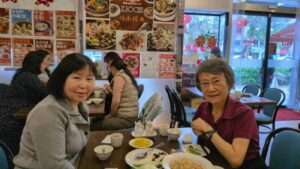
With Trudy Loo of the United Board in Taipei, Taiwan, February 2026
Now retired from Academia Sinica and dividing her time between Taiwan and San Francisco, Lucia remains busy—still analyzing data, serving on boards, and urging more people to shoulder the responsibility for conservation together.
From those early mornings waiting for pheasants with Sheldon to late nights watching Lanyu owls flicker through sombre trees, Lucia’s life suggests that birds are more than heavenly messengers. They are also daily teachers, quietly insisting that the health of the living earth—and of our own cultures and communities—depends on what we choose to do, patiently and persistently, down here.