August 21, 2026
Same Page, New Leaf at Payap

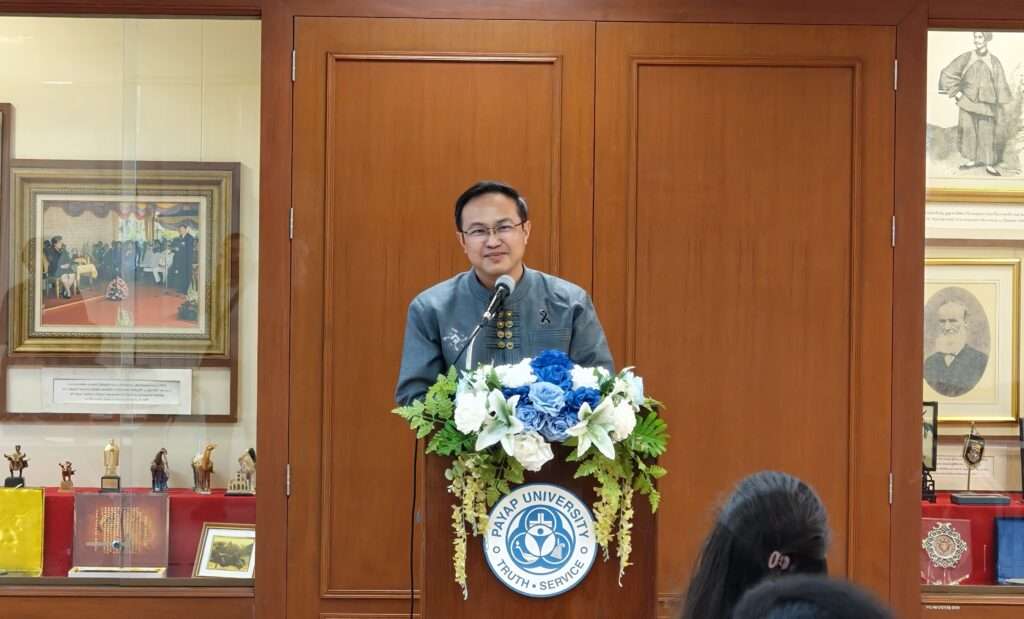
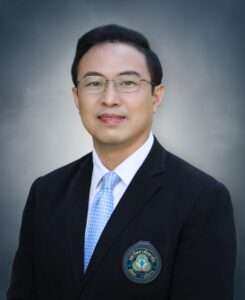
Payap University’s president, Apicha Insuwan, is leading a campus rooted in Christian values into a broader regional role as it becomes a center for innovation, cross-border collaboration, and the United Board’s new presence in Southeast Asia.
From student to steward of Payap
President Apicha’s story begins at Payap itself, where he studied accounting as an undergraduate. Raised in a Buddhist family, he had no initial plan to enter Christian higher education. After graduation, he joined Citibank Thailand in Bangkok as a financial analyst, spending five years in the corporate world and gaining valuable professional experience. A chance encounter with a former professor led him to attend church “to sing,” however, setting him on a path that eventually led to his conversion to Christianity after he returned to Chiang Mai to care for his mother.
Payap then invited him back, and he went on to earn a master’s degree in finance in the US before returning once more to teach. Over time, he also became a PhD candidate in business administration and served in student affairs, international affairs, asset administration, and academic leadership—experience that gave him a broad understanding of how the university works.
When he later became vice president for finance, he helped the institution navigate a period of serious financial difficulty, an experience that deepened his sense of responsibility for Payap’s future. Now in his second five-year term as president, he describes his role in terms of stewardship: holding the university in trust and caring for its people, its mission, and its academic quality.
Payap’s evolving mission and partnership
Founded in 1974 in Chiang Mai, Payap was the first private university in Thailand and a landmark initiative of the Church of Christ in Thailand to serve the nation through higher education. Its Mae Khao campus, just outside the old city of Chiang Mai, occupies about 120 acres of green grounds with classrooms, laboratories, dormitories, and support facilities. Today, Payap enrolls around 5,000 to 6,000 students, with an International College drawing students from about 30 countries, and a teaching staff of roughly 800 to 900. The university offers 48 degree programs at the bachelor, master, and doctorate levels. These programs are predominantly liberal arts and pre-professional and include nursing, business, pharmacy, law, music, theology, software engineering, multiple language programs, and many others. Payap consistently seeks new academic programs to meet the needs of the incoming student body and the greater community.
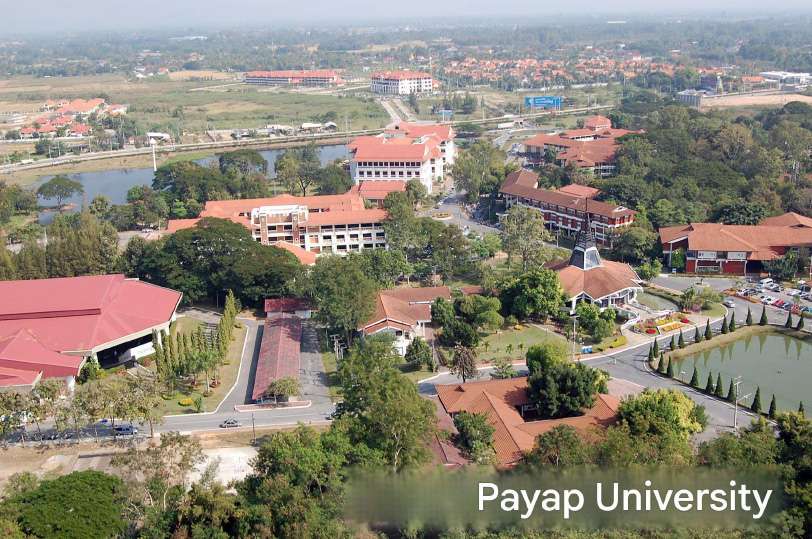
An aerial view of the Payap campus
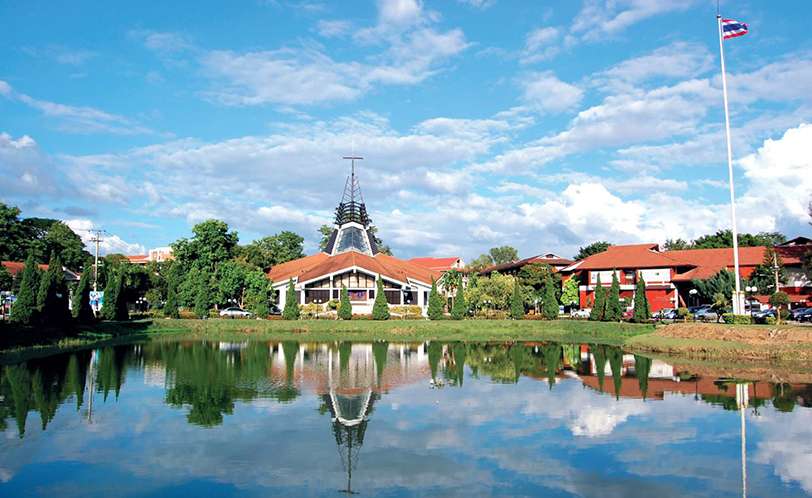
Henry Luce Chapel at Payap
Historically, Payap understood itself primarily as a local service institution focused on Thai students. Under President Apicha, that vision has expanded toward becoming a “self-sustaining global innovation hub” grounded in Christian values yet open to the world.
“Today we have moved beyond simple information transfer to what we call whole person education,” President Apicha says. “We treat every student as an individual with inherent dignity and limitless potential. Through this human-oriented paradigm, Payap hopes to address the deepest needs of our community and contribute to cultural and spiritual renewal.”
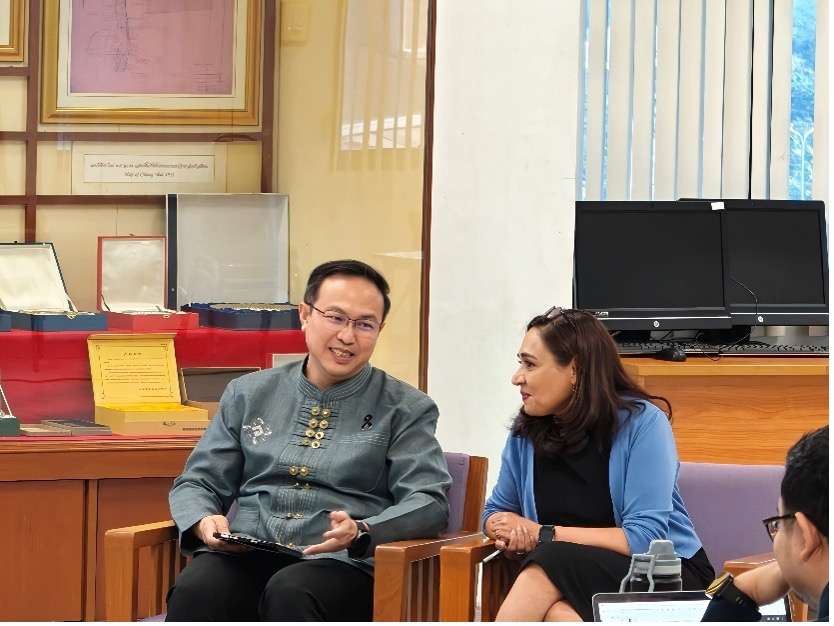
In this context, the United Board is a key partner. President Apicha, an alumnus of the inaugural cohort of the United Board Fellows Program and a participant in the Heads of Institutions Leadership Strategy Summit in the summer of 2024, credits these experiences with helping to shape him as a servant leader. He is particularly concerned about what he calls “academic capitalism”, in which universities pursue market-driven metrics at the expense of their humanistic and spiritual mission, especially in a region still dealing with the economic and psychological aftereffects of the pandemic. He believes the United Board can help Christian universities sustain a “pedagogy of purpose” and strengthen networks so that institutions “do not walk alone”.
Hosting a new regional office
The establishment of a United Board office on Payap’s campus marks a new chapter in this partnership and in Payap’s regional role. The Mae Khao campus, already known for its warm community and international outlook, is well positioned to welcome faculty, staff, and academic leaders from across Asia. In the first half of 2026, Payap hosted the United Board’s significant new initiative on social entrepreneurship as well as its Asian Academy for Campus Ministry, and it is also scheduled to host the Institute for Advanced Study in Asian Cultures and Theologies in the summer.

Signing of the lease in January 2026
President Apicha hopes that faculty and students of Payap will become more familiar with the United Board’s mission and that its presence will be woven into campus life, including events such as International Day and future joint research projects. “I hope to see the development of a regional learning community, ” he said, “in which Payap’s own strengths—its international programs, its church connections, and its experience hosting Christian conferences—support broader collaboration in Christian higher education.”
The Payap–Yonsei Mission Center for Humanistic Medicine
One of the most vivid expressions of Payap’s new strategic move is the Payap–Yonsei Mission Center for Humanistic Medicine, launched during a recent visit to Yonsei University. Established as a pilot project under the Office of the President, the center is intended to serve as a strategic hub for global outreach. Through this partnership, Yonsei will send doctors and medical students to Chiang Mai to work alongside Payap’s pharmacy and nursing students and faculty in serving local communities. The center will begin with short-term outreach in remote areas of Chiang Mai and, later, in Myanmar, guided by the framework “learn, act, lead”.
President Apicha speaks of the initiative with evident enthusiasm. Similar to Christian camps, participants will study local conditions, conduct surveys, and then offer volunteer medical services, potentially two or three times a year. Over the longer term, he sees the center as part of a renewed exploration of a Faculty of Medicine at Payap. The phrase “humanistic medicine” reflects a desire to combine scientific excellence with a deep concern for human dignity and spiritual care, and he plans to adapt some general education courses and involve the School of Theology so that students learn servant leadership in a healthcare context.
Looking ahead
President Apicha’s priorities for the next phase of Payap’s development are ambitious yet grounded in pragmatism. He wants to increase the proportion of international students—formerly under five percent—so that Payap becomes a place where students from China, Myanmar, and around the world can come and thrive. Environmental sustainability is another priority, with plans for solar projects, improved water management, and reduced electricity use as part of the university’s aspiration to become a greener campus.
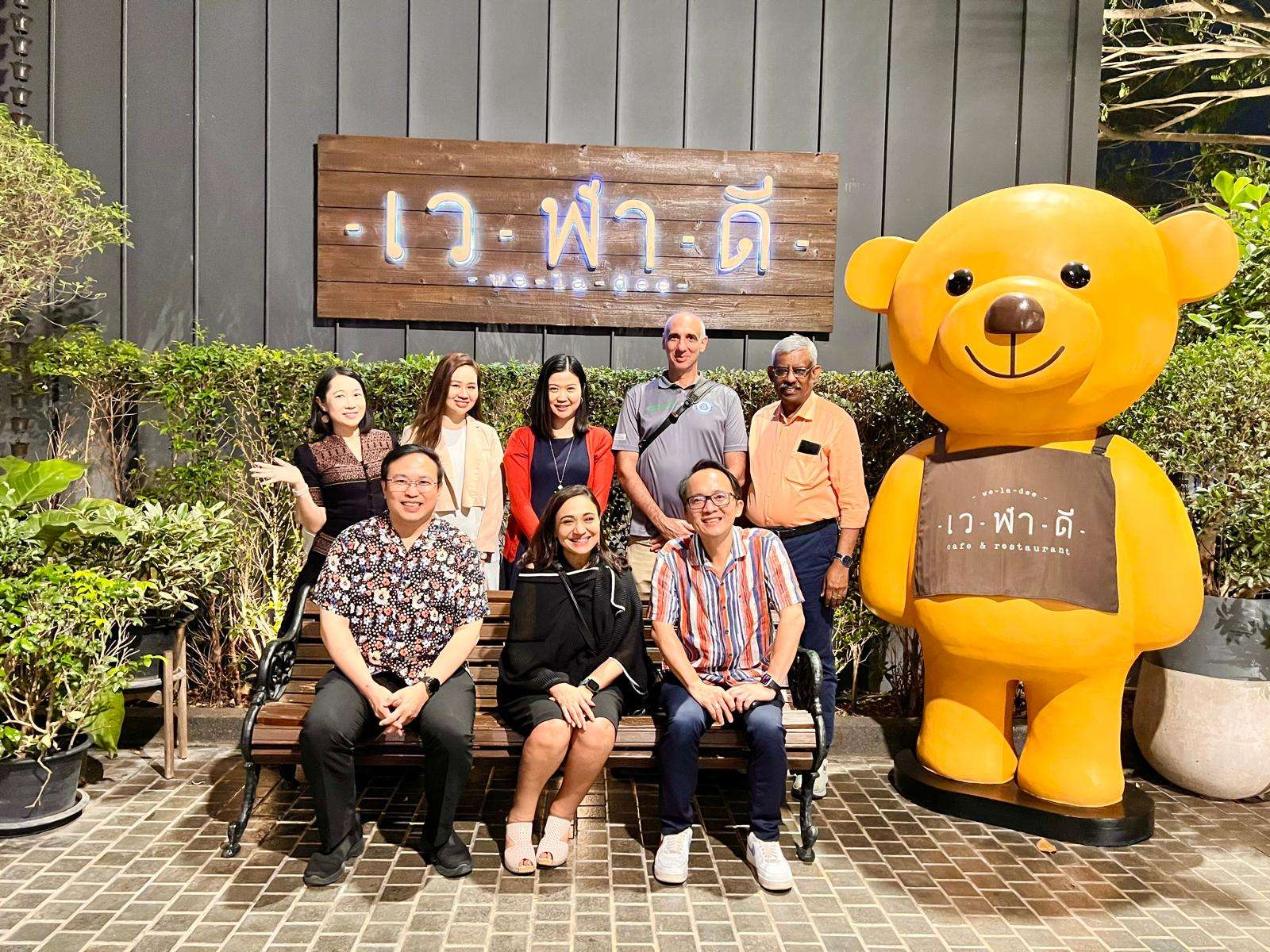
He also hopes faculty and students will engage in research that serves others, not simply individual careers, aligning scholarship more closely with service. As the United Board settles into its new office on the Mae Khao campus, President Apicha stands at a pivotal intersection of personal calling, institutional transformation, and regional collaboration. His journey—from a young banker in Bangkok to a servant-leader in Chiang Mai—parallels Payap’s own transformation from a small, church-supported institution into an emerging global innovation hub rooted in Christian values. In that shared journey, the deepening partnership between Payap and the United Board may help shape not only one university’s future, but also the wider landscape of Christian higher education in Southeast Asia.