
August 16, 2026

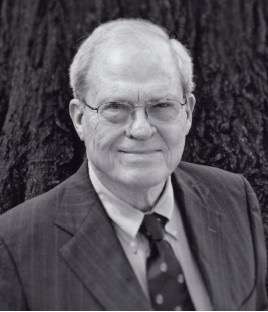
The United Board mourns the death of Dr. James T. Laney, president emeritus of Emory University, former United States ambassador to the Republic of Korea, and a devoted leader and friend of the United Board. Dr. Laney died on August 13, 2026, at the age of 98.
Dr. Laney served as a United Board trustee from 1978 to 2005, including terms as board chair and vice chair. Across his nearly three decades of service, he brought to the Board a deep commitment to Asia, an educator’s belief in the transforming power of learning, and a Christian understanding of leadership as service.
His fellow trustees remembered him as a generous and thoughtful leader who answered the call to chair the Board more than once. At an important moment in the United Board’s development, he led an extensive review of its work and helped the organization move toward closer partnership with Asian Christian colleges and universities. Under his guidance, the Board expanded Asian participation in its governance, strengthened grantmaking and joint initiatives proposed by partner institutions, and supported programs increasingly located in Asia and led by Asian educators.
These changes reflected a conviction that had shaped Dr. Laney’s life: education should prepare people not only to succeed, but also to serve. In a message written as United Board chair for the United Board Annual Report 1999–2000, he described “living beyond ourselves” and “living for others” as central to the Christian faith. He called on Christian colleges and universities to help students apply their knowledge and abilities not merely for personal advancement, but “as ways to serve all humankind.”
For Dr. Laney, this ideal had practical implications. He believed professional education should reclaim its purpose of service, the liberal arts should enlarge students’ minds and imaginations, and that service-learning should place students in unfamiliar contexts that would challenge them intellectually, emotionally, and spiritually. He also saw Christian institutions as natural homes for cultivating servant leadership. Together, these elements would enable graduates to make an enduring difference in the world.
Dr. Laney’s relationship with Asia began early in his life. Born on December 24, 1927, he studied economics at Yale University, with his undergraduate years interrupted by service in the United States Army in Korea. After graduating from Yale in 1950 and completing theological studies, he returned to Korea in 1959 with his wife, Berta, and their family as a Methodist missionary. He taught at Yonsei University in Seoul until 1964 and worked with the Korean Student Christian Council. The experience deepened his love for Korea and helped shape his lifelong vocation as an educator, bridge builder, and peacemaker.
After earning a doctorate in Christian ethics from Yale, Dr. Laney joined the faculty of Vanderbilt Divinity School. He later became dean of Emory University’s Candler School of Theology and, in 1977, the 17th president of Emory. During his 16-year presidency, he guided Emory’s development from a regional teaching institution into a leading research university, while insisting that academic excellence remain joined to moral purpose.
In 1993, Dr. Laney was appointed by President Bill Clinton as United States ambassador to South Korea, serving during a period of grave tension on the Korean Peninsula. He continued to advocate for dialogue and reconciliation after returning to the United States, including as co-chair of the Council on Foreign Relations Task Force on Korea. In 2019, he received the World Methodist Peace Award for his contributions to peace, reconciliation, and justice.
Yet those who served with him at the United Board remembered more than his distinguished record. They remembered his empathy, perceptiveness, encouragement, humor, and gift for friendship. At his retirement from the Board in 2005, his fellow trustees described him as “the quintessential scholar-leader-servant,” whose knowledge of and devotion to Asia were matched by his “unique role in American higher education.”
The United Board gives thanks for Dr. Laney’s long and faithful service, for the wisdom and humanity he brought to its work, and for his steadfast belief that Christian higher education can prepare students to live beyond themselves. His influence endures in the partnerships he strengthened, the institutions he guided, and the generations of leaders he inspired to place knowledge in the service of others.
We extend our deepest condolences to Dr. Laney’s family, friends, former students, and colleagues, and to all whose lives were touched by his remarkable ministry of education, leadership, and peace.